

By Dr. Andrew Lasley, DMD
Yes, orthodontic treatment can help jaw alignment when the issue is related to how the teeth and bite fit together. Braces, Invisalign, rubber bands, and other orthodontic tools can guide teeth into better positions, improve bite balance, and reduce strain caused by poor alignment. When the jaw mismatch is more severe or skeletal, surgical orthodontics may be recommended.
Jaw alignment is not only about how the smile looks. It can affect chewing, speech, tooth wear, jaw comfort, and how evenly the teeth meet when you bite down. Some cases are mild and can be managed with braces or clear aligners. Others need a more advanced plan because the upper and lower jaws do not line up properly.
At Lasley Orthodontics, patients can explore personalized treatment options with Dr. F. Andrew Lasley, including braces, Invisalign, and orthodontic surgery when appropriate.
What Does Jaw Alignment Mean?
Jaw alignment refers to how the upper jaw, lower jaw, and teeth fit together. Ideally, the upper and lower teeth should meet in a way that allows comfortable chewing, even pressure, and stable bite function.
When the bite is off, the teeth may not come together evenly. One side may hit first. The front teeth may overlap too much. The lower teeth may sit in front of the upper teeth. The back teeth may not line up side to side.
These issues are often described as bite problems, or malocclusions.
What Jaw Alignment Problems Can Orthodontics Help?
Orthodontic treatment may help several bite and jaw alignment concerns.
Common problems include:
- overbite
- underbite
- crossbite
- open bite
- crowding that affects bite fit
- spacing that changes bite stability
- jaw shifting when biting down
Not every jaw alignment issue has the same cause. Some are mostly dental, meaning the teeth are positioned incorrectly. Others are skeletal, meaning the upper and lower jaws have grown in a way that does not match well.
Can Braces Help Jaw Alignment?
Braces can help jaw alignment when the problem involves tooth position and bite relationship.
Braces use brackets and wires to move teeth gradually. They can help correct crowding, spacing, overbite, underbite, crossbite, and other alignment concerns. Rubber bands may also be used to help guide how the upper and lower teeth fit together.
For many patients, braces are useful because they give the orthodontist strong control over tooth movement. This can be especially helpful when the bite needs careful coordination.
Braces do not physically reshape the jaw in every case. But by changing how the teeth meet, they can improve bite function and reduce some alignment-related strain.
Can Invisalign Help Jaw Alignment?
Invisalign can help with some jaw alignment and bite issues, especially when the problem is mild to moderate and mainly related to tooth position.
Clear aligners move teeth through a series of custom trays. They can be a good option for patients who want a more discreet treatment experience.
Invisalign may help with:
- mild crowding
- spacing
- some overbites
- some crossbites
- mild open bite cases
- bite refinement after earlier treatment
However, Invisalign is not always the best option for more complex jaw alignment problems. Some cases need the control of braces, appliances, or surgical orthodontics.
Braces vs Invisalign for Jaw Alignment
The better option depends on the type and severity of the bite problem.
| Treatment Factor | Braces | Invisalign |
|---|---|---|
| Mild bite issues | Very effective | Often effective |
| Moderate bite correction | Very effective | Case-dependent |
| Complex jaw alignment | Often stronger | May be limited |
| Removability | Fixed on teeth | Removable |
| Visibility | More noticeable | More discreet |
| Patient discipline | Less dependent on daily wear choice | Requires consistent wear |
| Detailed tooth control | Strong | Case-dependent |
Both options can work well, but they are not interchangeable for every patient. The right choice depends on what needs to move, how much control is required, and whether the jaw relationship itself is part of the problem.
When Is Jaw Surgery Needed?
Jaw surgery, also called surgical orthodontics or orthognathic surgery, may be recommended when the jaw alignment problem is too severe for braces or Invisalign alone.
This can happen when the upper and lower jaws are different sizes, positioned poorly, or not growing in balance. In these cases, orthodontic treatment may straighten the teeth, but surgery may be needed to reposition the jaws.
Surgical orthodontics may be considered for:
- severe underbite
- severe overbite
- major jaw asymmetry
- open bite caused by jaw position
- chewing or biting problems from skeletal mismatch
- facial imbalance related to jaw growth
Not every patient with jaw alignment concerns needs surgery. Many bite problems can be improved with orthodontic treatment alone. The only way to know is through a proper evaluation.
What Happens During an Orthodontic Jaw Alignment Evaluation?
An orthodontic evaluation looks at more than whether the teeth are straight. The orthodontist checks how the teeth fit together, how the jaws relate to each other, and whether the bite is stable.
The visit may include:
- photos
- digital scans or impressions
- X-rays
- bite analysis
- facial profile evaluation
- discussion of symptoms and goals
This helps the orthodontist determine whether the issue is dental, skeletal, or a combination of both. It also helps decide whether braces, Invisalign, appliances, or surgical orthodontics should be considered.
Signs Your Bite or Jaw Alignment May Need Attention
You may want to schedule an orthodontic evaluation if you notice:
- trouble biting or chewing
- front teeth that do not touch
- lower teeth sitting in front of upper teeth
- upper teeth covering too much of the lower teeth
- jaw shifting when you bite down
- uneven tooth wear
- teeth that hit harder on one side
- frequent jaw discomfort
- difficulty closing your lips comfortably
Does Orthodontic Jaw Alignment Help With Comfort?
It can, especially when discomfort is related to an uneven bite.
If certain teeth hit too hard, the jaw shifts to find a comfortable position, or the bite does not distribute pressure evenly, orthodontic treatment may help improve balance. Better alignment can also reduce uneven tooth wear and make chewing feel more natural.
However, jaw pain can have many causes. Stress, clenching, grinding, joint problems, muscle tension, and dental issues may also play a role. Orthodontic treatment can help when bite alignment is part of the problem, but it is not a guaranteed solution for every type of jaw discomfort.
A Better Bite Starts With the Right Diagnosis
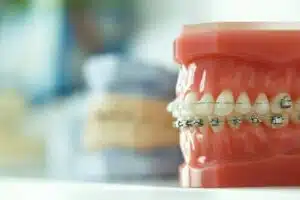
Orthodontic jaw alignment treatment can help many patients improve how their teeth and bite fit together. Braces, Invisalign, rubber bands, appliances, and surgical orthodontics all have different roles depending on the problem.
The most important step is diagnosis. A mild bite issue may only need orthodontic tooth movement. A more complex jaw mismatch may require a broader plan. The goal is not simply to make the teeth look straight, but to create a bite that functions as comfortably and predictably as possible.
At Lasley Orthodontics, Dr. Andrew Lasley, DMD helps patients in Renton, WA understand whether jaw alignment concerns can be treated with braces, Invisalign, or a more advanced orthodontic approach. A consultation can clarify what is causing the bite problem and which treatment path makes the most sense.
Frequently Asked Questions
How do I know if my jaw alignment is off?
Signs may include trouble chewing, uneven bite pressure, jaw shifting, open bite, underbite, deep overbite, or teeth that do not meet properly.
Is jaw surgery always needed for jaw alignment?
No. Many bite problems can be treated with braces or Invisalign. Surgery is usually considered when the jaw mismatch is too severe for orthodontic treatment alone.
Can adults correct jaw alignment?
Yes. Adults can often improve bite alignment with braces or Invisalign. If the issue is skeletal and significant, surgical orthodontics may be discussed.